




Water Cooler Capacity Guide for Offices, Schools & Commercial Spaces
In offices, schools and other commercial spaces, access to cool drinking water is important, especially where many people use the facility throughout the day. However, choosing the right water cooler capacity can be challenging, as the ideal option depends on factors such as the number of users and expected daily consumption.
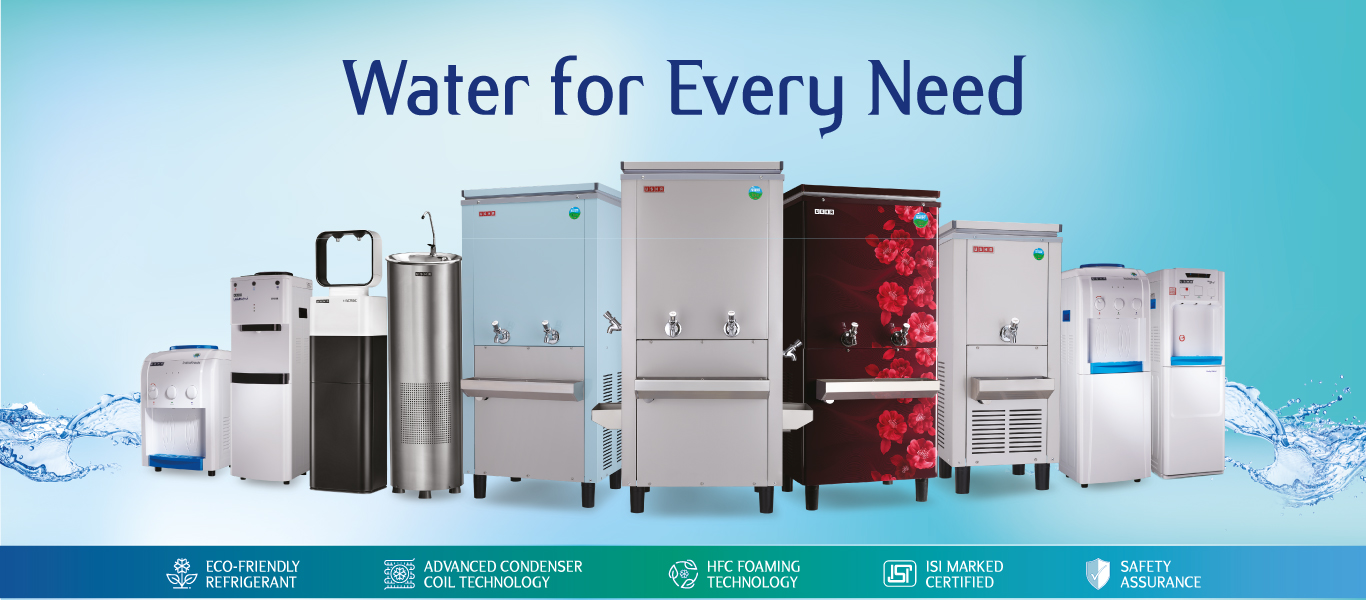
A cooler with insufficient capacity can lead to frequent refilling or longer wait times, while an oversized model may take up unnecessary space. For higher daily demand, USHA offers water coolers across different capacity ranges, including models with storage capacities of up to 400 litres.
Read on to understand how to assess the capacity of a water cooler and choose a suitable option for your space.
Why Choosing the Right Water Cooler Capacity is Important
The right water cooler capacity can affect convenience, space utilisation and day-to-day usability in busy environments. If the cooler is too small for the number of users, it may require frequent refilling or lead to longer waiting times during periods of high demand.
On the other hand, choosing a model with more capacity than necessary can take up additional space and may result in higher operating costs. The goal is to choose a water cooler that can meet your expected demand while fitting comfortably within your available space and usage requirements.
50L vs 100L vs 150L Water Cooler: Which Capacity Should You Choose?
| Water Cooler Capacity | Best Suited For | Key Considerations |
|---|---|---|
| 50 litre water cooler | Small offices, clinics and smaller user groups | Consider daily demand, available space and cooling capacity |
| 100 litre water cooler | Medium-sized offices, schools and workplaces | Compare storage capacity with cooling capacity and peak usage |
| 150+ litre water cooler | Large workplaces, colleges, factories, and high traffic areas | Consider both storage and LPH requirements, along with available installation space |
What Does Water Cooler Capacity Mean?
There are generally two types of cooler capacity. But most buyers often get confused, leading to purchase errors.
Storage Capacity vs Cooling Capacity
Storage capacity means the unit's ability to hold a certain amount of water, usually measured in litres. Cooling capacity, by contrast, is the amount of water the machine can chill within a specific amount of time.
For example, USHA’s 120-litre SS60120G model has a 120 L storage capacity and 60 L/h cooling capacity, showing why these two specifications should not be treated as the same.
Understanding Litres Per Hour (LPH)
LPH refers to the number of litres of water that the cooler can chill to a drinking temperature per hour. If an office or school is busy enough, the LPH rating is as important as the tank size.
A higher LPH rating can be useful where chilled water is required frequently throughout the day.
How to Calculate the Right Water Cooler Capacity?
Estimate Daily Drinking Water Requirement
Estimate how much chilled water your users are likely to consume during the day. Consider the number of employees, students, visitors or other users, along with the duration of use and whether other drinking-water sources are available.
This gives you an estimate of overall demand, which you can then compare with the cooler's storage and cooling capacity.
Account for Peak-Hour Usage
Think beyond the average. Plan for the hour of greatest demand, such as morning arrival or lunchtime, when demand can spike. Pick a suitable USHA water cooler with robust cooling performance to serve you faster at peak times.
Water Cooler Capacity by Number of Users: Offices, Schools, and Larger Establishments
Capacity for Small User Groups
For smaller offices and establishments where demand for chilled water is relatively low, a 40–60 L water cooler may be suitable. The USHA Large water cooler range covers this capacity segment.
Ideal Users: Offices and Small Spaces
Capacity for Medium User Groups
For mid-size offices, schools and educational institutions, a higher-capacity model may be more appropriate. Our USHA XL Water Cooler range includes 80–120 L water coolers, with different cooling capacities depending on the model.
Ideal Users: Schools and Colleges
Capacity for Large & High-Footfall User Groups
For locations with high and frequent demand, such as large schools and commercial establishments, a higher-capacity water cooler can help meet usage requirements. The USHA XXL Water Cooler range includes models from 120 L to 400 L, with cooling capacities varying by model.
Ideal Users: Factories & Commercial Spaces
Conclusion
Choosing the right water cooler capacity depends on the number of users, expected demand, peak usage and available installation space. Considering both storage capacity and cooling capacity can help you select a model that meets your requirements without taking up unnecessary space.
Ready to purchase a new water cooler or upgrade your existing one? Visit the USHA store to see the complete range of water coolers available in all capacities.
Frequently Asked Questions
Does a higher-capacity water cooler consume more electricity?
Not always. Modern coolers are designed to be energy efficient; higher capacity does not mean higher power usage.
What size water cooler is suitable for a small office?
The standard size for offices with fewer than 20 staff members is a 20-50L water cooler unit.
Can the same water cooler be used in schools and offices?
Yes; however, with daily use and more users, schools tend to require higher-capacity units.
Can a water cooler be installed in both indoor and semi-outdoor areas?
Most water coolers can be used in both indoor and semi-outdoor areas; however, always consult the manufacturer's placement instructions first.
What should I check before installing a water cooler at my premises?
Before purchasing your unit, consider factors like the available space, power source, water supply and daily usage requirements.